Sept 2025: Good news! We can now continue our ADHD escape room project with a grant from NWO. Please read this news item, including an interview with Jeanette and Martine.
Sept 2025: Good news! We can now continue our ADHD escape room project with a grant from NWO. Please read this news item, including an interview with Jeanette and Martine.
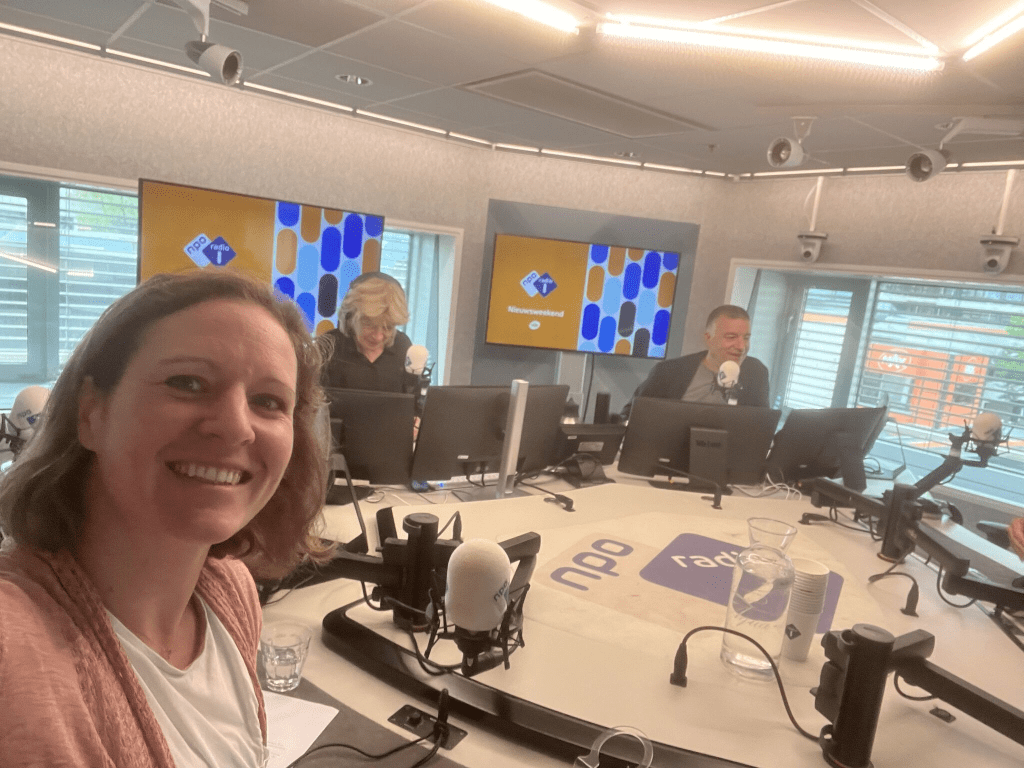
Aug 2025: Last Saturday our group member Dr. Jeanette Mostert was invited in the radio studio of our national radio station NPO1. She was interviewed about our ADHD escape room. Please click on this link to hear her interview.
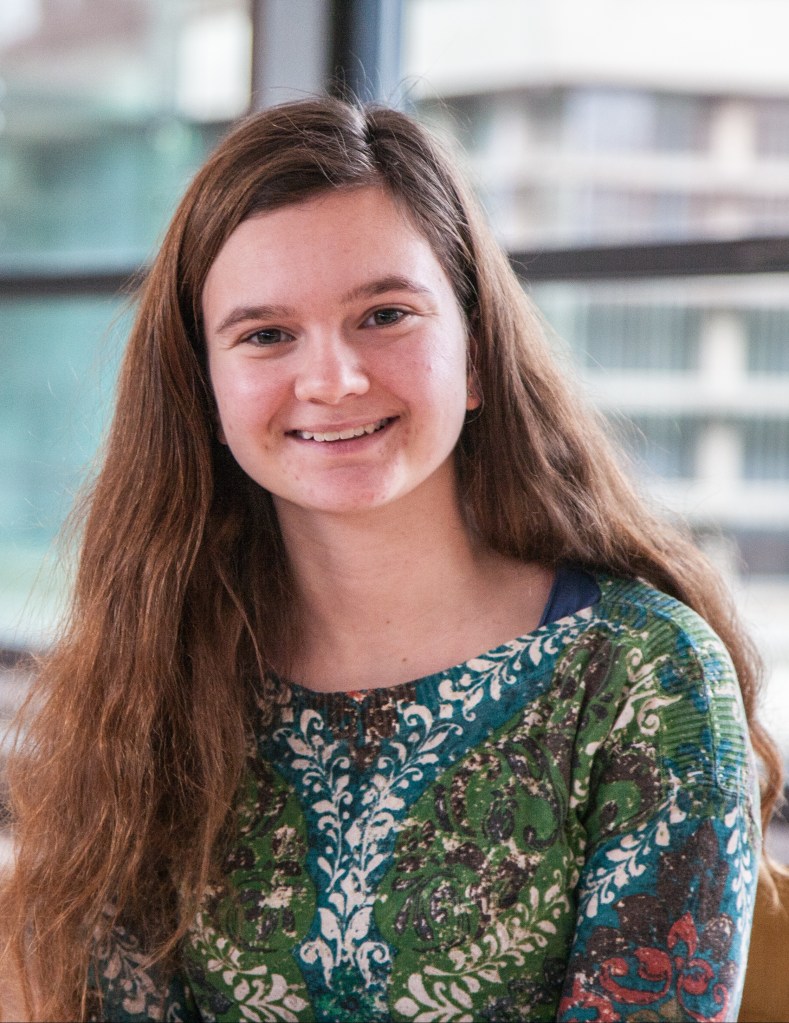
Aug 2025: Lessa Schippers, a Ph.D. candidate in our group has obtained two grants, The Ter Meulen grant and a grant from the Culture Fund, to spend four months abroad. She will join Dr. Emma Climie’s research group at the University of Calgary in Canada. Her project will focus on the positive aspects of ADHD in children and adolescents, which will be a valuable addition to her current research on the positive aspects of ADHD in adults.
During her stay, she will contribute to an intervention study focused on social skills training for young people with ADHD and be involved in analyzing research data. She will also attend the CADDRA (Canadian ADHD Resource Alliance) conference to gain insight into ADHD research and clinical practice in Canada.
Dr. Climie specializes in child psychology and has committed herself to strengthening the resilience and well-being of children with ADHD for many years. She leads the research group “Strengths in ADHD,” which takes a strengths-based approach to working with children and families with ADHD. This collaboration will allow Lessa to deepen her expertise and integrate international insights into her research.
Lessa received two grants to support her research stay: a internationalization grant from the Cultural Fund (Banning de Jong Fund) and a KNAW Ter Meulen grant. Both grants support young researchers in achieving their international goals and promote the exchange of knowledge across national borders. Specifically, the KNAW Ter Meulen grant supports young pediatric researchers who wish to conduct research abroad. The Cultural Fund supports talented students and young researchers in realizing their dream careers through international experience. The Banning de Jong Fund, a named fund within the Cultural Fund, focuses on projects related to the relationship between culture and medicine and on granting scholarships for medical research.

Aug 2025: Vanaf september 2025 zal Lessa Schippers, PhD-kandidaat in de onderzoeksgroep van dr. Martine Hoogman, vier maanden onderzoek doen in de onderzoeksgroep van dr. Emma Climie aan de University of Calgary in Canada. Haar project richt zich op de positieve kanten van ADHD bij kinderen en jongeren, een waardevolle aanvulling op haar huidige onderzoek naar positieve aspecten van ADHD bij volwassenen.
Tijdens haar verblijf zal Lessa onder andere bijdragen aan een interventiestudie gericht op sociale vaardighedentraining voor jongeren met ADHD, en betrokken zijn bij de analyse van onderzoeksdata. Daarnaast zal ze een bezoek brengen aan het CADDRA (Canadian ADHD Resource Alliance) congres, om een breder beeld te krijgen van het ADHD-onderzoek en de klinische praktijk in Canada.
Dr. Climie is gespecialiseerd in kinderpsychologie en zet zich al jaren in voor het versterken van veerkracht en welzijn bij kinderen met ADHD. Zij leidt de onderzoeksgroep “Strengths in ADHD”, die zich richt op kinderen en gezinnen met ADHD vanuit een sterke-kantenbenadering. De samenwerking biedt Lessa de kans om haar expertise te verdiepen en internationale inzichten te integreren in haar onderzoek.
Voor dit onderzoeksverblijf ontving Lessa twee beurzen: een buitenlandbeurs van het Cultuurfonds (Banning de Jong Fonds) en de KNAW Ter Meulen beurs. Beide beurzen zijn bedoeld om jonge onderzoekers te ondersteunen in hun internationale ambities en dragen bij aan kennisuitwisseling over landsgrenzen heen. De KNAW Ter Meulen beurs richt zich specifiek op jonge onderzoekers binnen de kindergeneeskunde die een werkbezoek willen brengen aan het buitenland. Het Cultuurfonds ondersteunt getalenteerde studenten en onderzoekers bij het realiseren van hun droomcarrière door middel van internationale ervaring. Het Banning de Jong Fonds is een fonds op naam binnen het Cultuurfonds dat zich richt op projecten rond de relatie tussen cultuur en geneeskunde, en het verlenen van beurzen voor wetenschappelijk onderzoek binnen de geneeskunde.
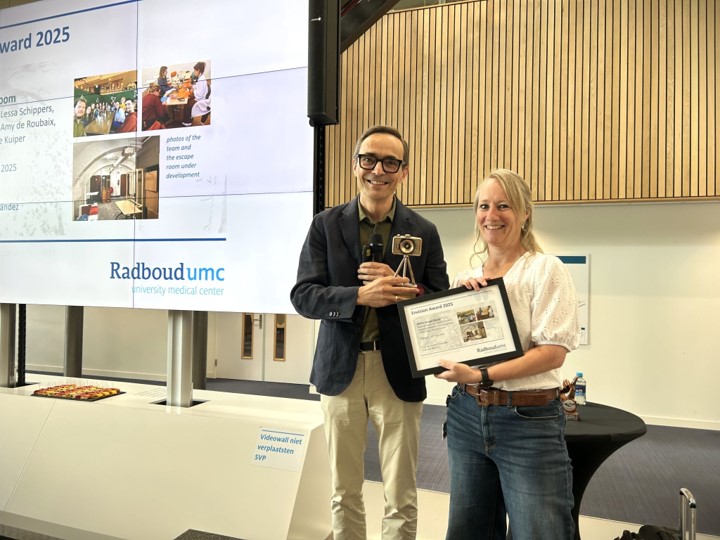
Juni 2025: At this year’s Radboudumc Research Strategy Day, our ADHD escape room project won the Envision Award 🏆 . This award acknowledges efforts of scientists that ‘captivate audiences with original outreach’, ‘connect science to real-world experiences‘ and ‘inspire curiosity and care beyond academia‘. Please also see the other great nominees !
It was already very rewarding to work with so many enthousiastic students, but this is a very nice bonus!
Great team effort by all the people below!!


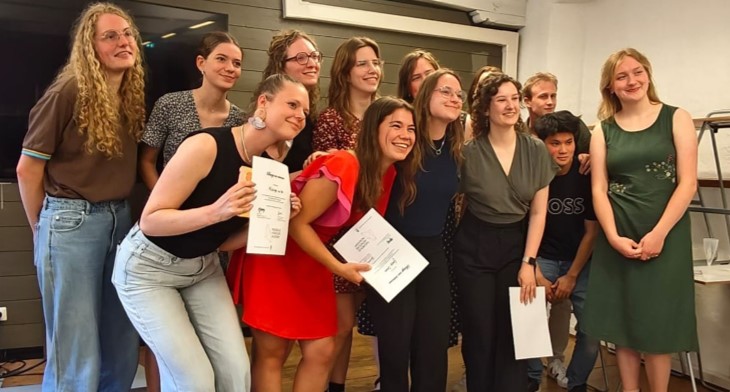

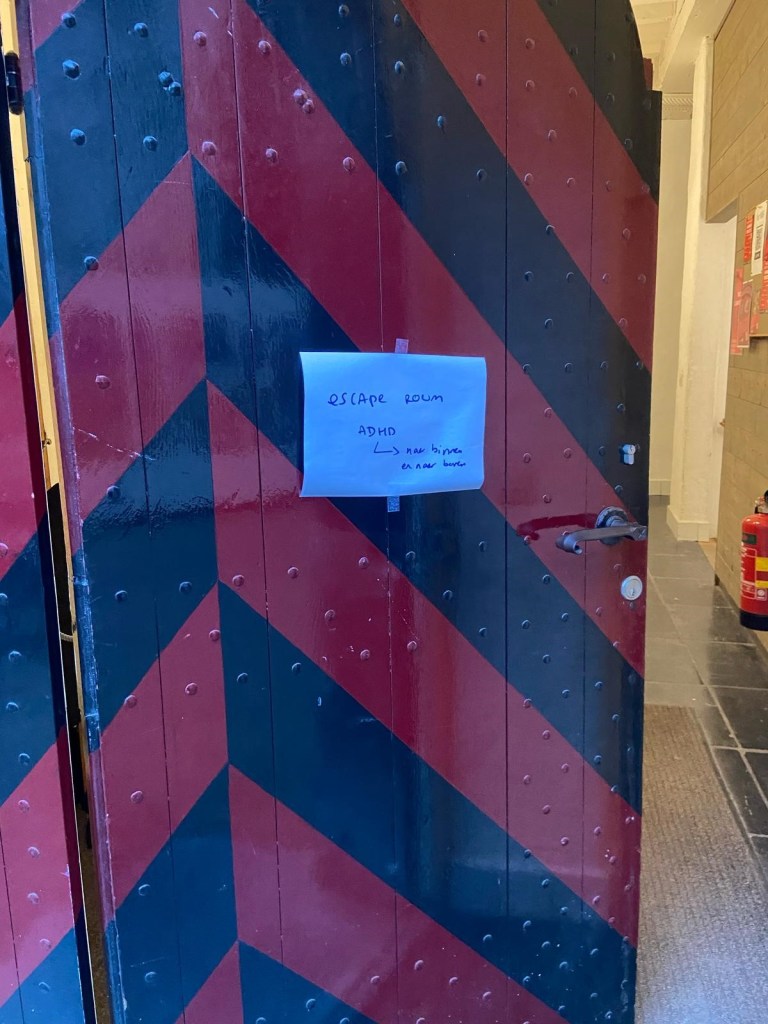
June 2025: A long time ago we brainstormed about creating an ADHD escape room, in 2023 to be exact ;-). Now years later, we are lauching our prototype! Jeanette Mostert (and Lessa, Amy and Martine) together with colleagues from the honors academy, created an honors course for Radboud University students. During this course students were trained in design thinking and in how to make an educational escape room. The student also took a field trip to the Big Escape in Zwolle (an escape room company). During the course the students, step-by-step, created and build the ADHD escape room. Two students that took part in the course were interviewed by Vox magazine about their experiences. We are really proud of all 15 students who worked so hard on this project! Big party tomorrow on the 12the of June in the Latijnse School in Nijmegen.
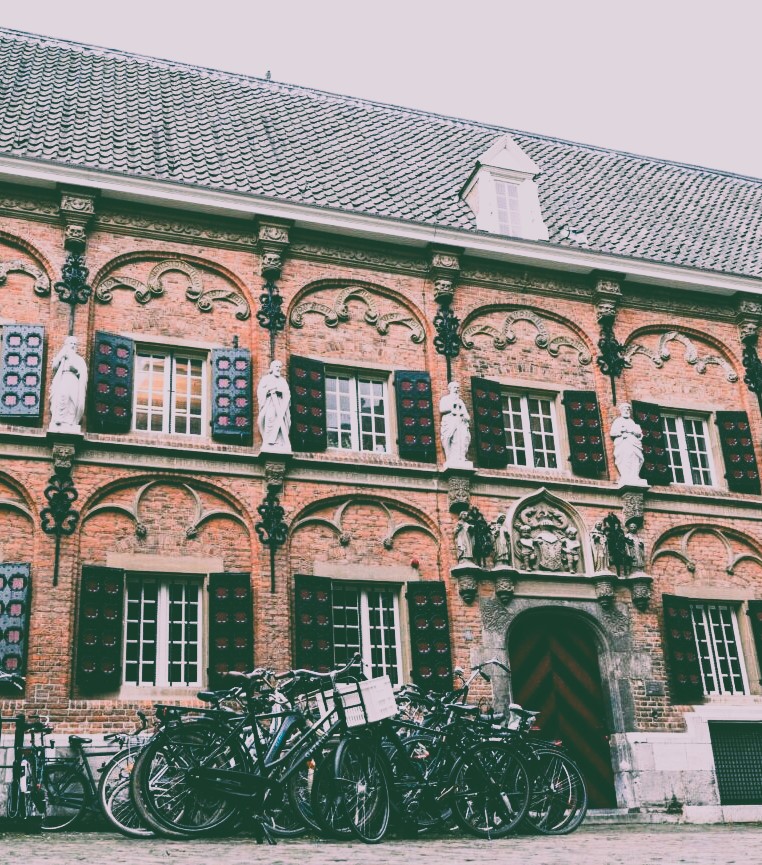

April 2025: Lessa and Martine attended the Dutch Psychiatry Spring Conference in Maastricht to present their work. Lessa had a poster (in Dutch: ‘Positieve karaktereigenschappen van ADHD: Een zelf- en peer-report case-control studie’) but also had the opportunity to do a pecha kucha. Martine was part of the session for invited professors (Innovatieve Benaderingen in de Psychiatrie:
Van Onderzoek naar Toepassing) and presented an overview of her labs work on positive aspects of ADHD. It was a great experience to share our work en get feedback from Dutch clinicians.

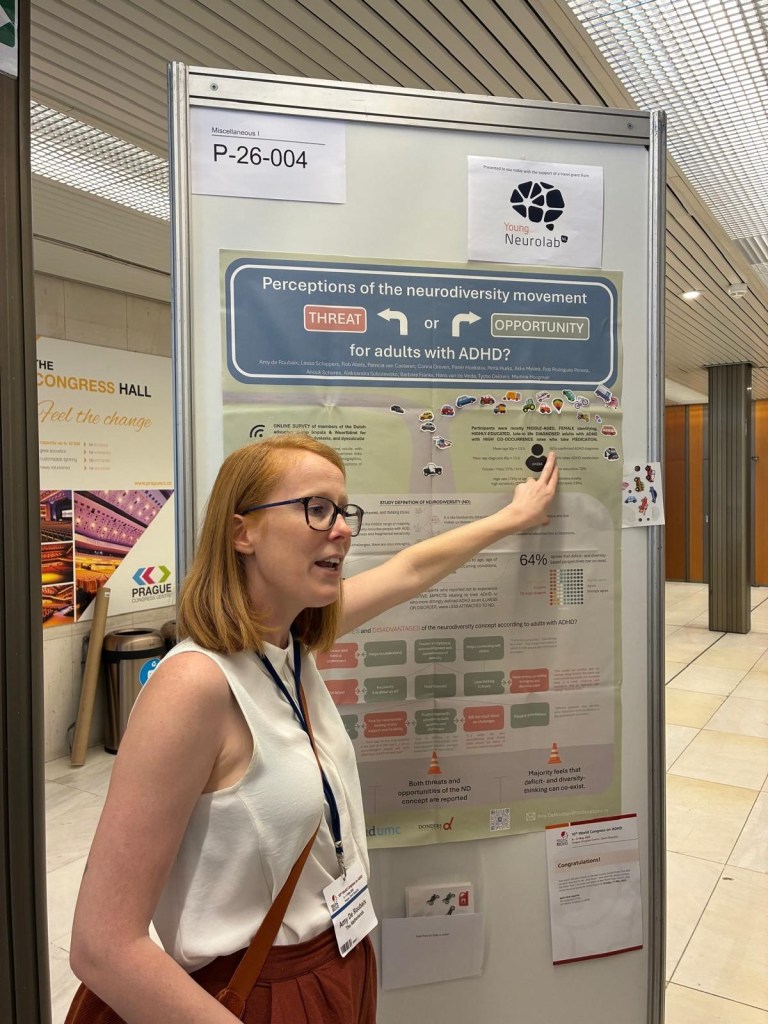
May 2025: Our lab members Han Fang (PhD candidate) and Amy de Roubaix (postdoc) were nominated for the best poster award at the ADHD world congress in Prague this year. Han Fang presented her poster about ongoing work on Creativity, mindwandering and ADHD. Amy presented her poster entitled: Perceptions of the neurodiversity movement: Threat or opportunity for adults with ADHD? She was very active in her presentation, trying to get people to put stickers on her poster to capture the audience’s perspectives on the neurodiversity movement. This (probably ;-)) led to her winning one of the six Best Poster awards at the conference. Well done both!

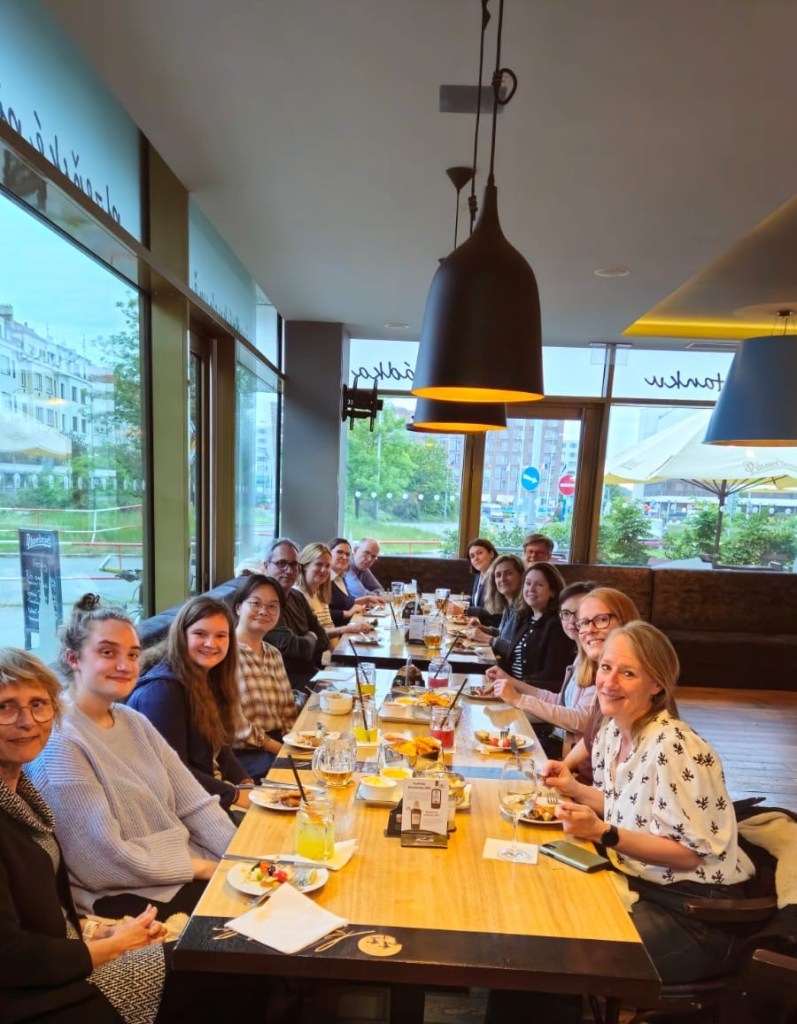



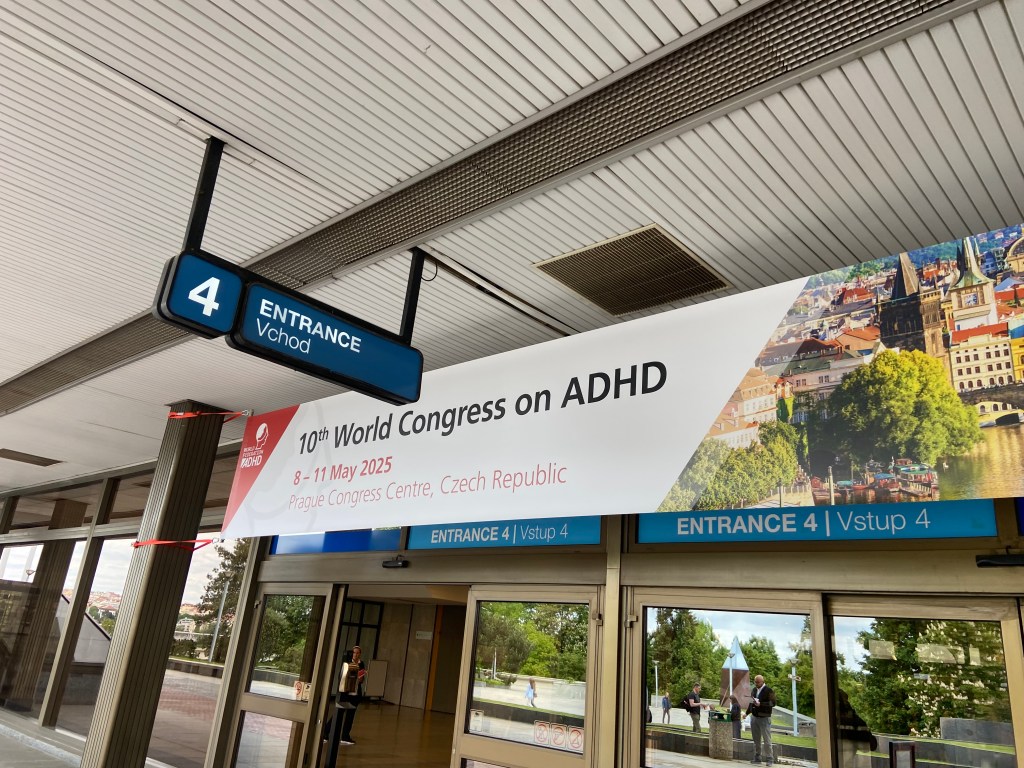


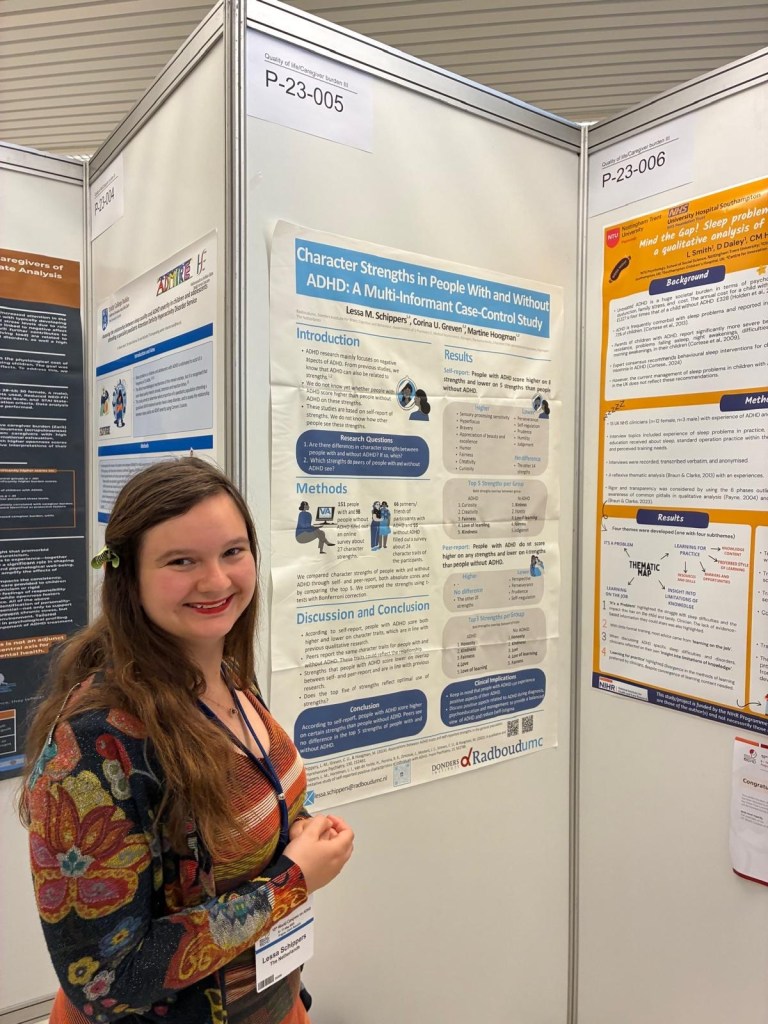
May 2025: We were lucky enough to go to the ADHD world congress in Prague with many members of our lab. Amy de Roubaix, Han Fang, Lessa Schippers, Lisa Horstman and Biqing Chi were all there to present their posters about their ongoing work. Fortunately, we also met up with our former member, Luca Hargitai (University of Bath), who also presented a poster at the conference. Martine Hoogman presented an overview of our groups work in the session, co-chaired with Edmund Sonuga-Barke, entitled: Neurodiversity approach: Evidence for positive and strength focused aspects in ADHD. We were amazed to see so many people there, even sitting on the floor. In this session, Nitzan Shahar, Brandy Callahan and Myriam Bea shared the latest about attitudes towards ADHD, factors supporting succesful functioning and how (some) people with ADHD do not want to give up their ADHD.
April 2025: Even delen dat onze geocache ‘Geocache je mee en leer wat over ADHD‘ al meer dan 100 keer is gevonden. Dat vinden we heel leuk!
Daarnaast lieten veel mensen een leuke review achter, waaronder deze:
In deze stralende ochtend zon op weg naar mijn werk een extra lange wandeling gemaakt via deze adventure lab. Als docent aan de medische faculteit was ik heel nieuwsgierig. Leuk educatie materiaal. Goed gedaan 👍
ik had moeite om vandaag van de bank af te komen, deze lab gaf het zetje dat ik nodig had. Oudste dochter is ca 5 jaar geleden gediagnosticeerd met ADD, dus de info kwam me allemaal wel bekend voor. Maar mooi dat er aandacht voor is zo! Ook bijzonder om tijdens de wandeling alle werkzaamheden aan het ziekenhuis te zien.
April 2025: Just to share that our geocache about ADHD has already been found more than 100 times. We are really excited about that!
Many people left a nice review, including these ones:
“In this bright morning sun on my way to work I took an extra long walk via this adventure lab. As a teacher at the medical faculty I was very curious. Nice educational material. Well done 👍”
“I had trouble getting off the couch today, this lab gave me the push I needed. My oldest daughter was diagnosed with ADD about 5 years ago, so the information all seemed familiar to me. But it’s great that there is attention for it like this! Also special to see all the construction work on the hospital during the walk.”
Thanks Geocachers!
April 2025: Op dinsdag 8 april organiseren onderzoekers van ons lab samen met het ADHD-Café Nijmegen een speciale editie. Deze avond staat volledig in het teken van kennisdeling en ervaringsuitwisseling. PhD student Lessa Schippers en postdoc Amy de Roubaix presenteren hun onderzoeksresultaten en studenten van het honourslab ADHD Escape room gaan in gesprek met de bezoekers van het café.
Het ADHD-Café is een initiatief van Impuls & Woortblind. Dé belangenvereniging voor volwassenen met ADHD, dyslexie en dyscalculie. Sinds augustus 2024 organiseert vrijwilligster (en tevens ervaringsdeskundig coach) Mandy Gout, iedere tweede dinsdag van de maand een bijeenkomst bij restaurant De Vier Heeren op de Sint Annastraat in Nijmegen. Het doel is om ervaringen uit te wisselen, herkenning en erkenning bij elkaar te vinden. Dit is voor veel deelnemers heel erg helpend bij het leren omgaan met ADHD en het omarmen van de positieve aspecten van een bruisend brein.
Intussen zijn wij ook bezig met allerlei initiatieven om het leven met ADHD beter te begrijpen. Dit voorjaar werken er namelijk 15 studenten van de Radboud Universiteit en de HAN samen aan een project waarin ze een Escape Room ontwerpen die ADHD op een ervaringsgerichte manier inzichtelijk maakt. Ongeveer een derde van hen heeft zelf ADHD; de anderen willen door middel van dit project beter begrijpen hoe het is om met ADHD te leven. Tijdens het ADHD-Café delen zij hun eerste ideeën en vragen ze het publiek om feedback. De Escape Room zal dan vanaf omstreeks juni te bezoeken zijn in het Donders Brein Museum.
Wat kun je van het ADHD-Café van 8 april verwachten?
Praktische informatie:
Datum: Dinsdag 8 april
Tijd: 19:15 inloop, 19:30 start, 21:00u borrel, 21:30 afsluiting
Entree: €3 voor leden / €4 voor niet-leden van Impuls & Woortblind; drankjes voor eigen rekening.
Aanmelden (verplicht):adhdcafenijmegen@impulsenwoortblind.nl
Deze avond biedt een unieke kans om wetenschappelijke inzichten, ervaringsverhalen en creativiteit samen te brengen. Wil jij bijdragen aan een vernieuwende manier om ADHD zichtbaar te maken? Meld je dan aan en praat, denk en borrel mee!

