News

ADHDplaza, Other, Positive aspects of ADHD

Exhibition on neurodiversity in the Brain Museum

Jan 2025: Our research is now on display in a museum! Will you come and have a look? Since December 2024, Nijmegen has an official Brain Museum in the city center. In this museum you can learn all kinds of things about the brain and how we research the brain and behavior.

The museum also has an exhibition on neurodiversity, which also focuses on our research. PhD student Lessa Schippers from our group worked with the Donders Institute to make a video. In this video she talks about our research on the positive aspects of ADHD. Visitors can also see how their ideas about ADHD change after watching the video by drawing threads about how they think about ADHD.

Will you be visiting the Brain Museum soon? The museum is free and open every Wednesday, Friday and Saturday from 11:00 to 16:00. The address is Sint Stevenskerkhof 2 in Nijmegen. See the website for more information.

Jan 2025: Ons onderzoek is nu te zien in een museum! Kom jij ook kijken? Sinds december 2024 heeft Nijmegen een officieel Brein Museum in het centrum van de stad. In dit museum kan je van alles leren over het brein en over hoe we onderzoek doen naar de hersenen en gedrag.

In het museum is ook een tentoonstelling over neurodiversiteit, waarin ook aandacht is voor ons onderzoek. PhD kandidaat Lessa Schippers uit onze groep nam samen met het Donders instituut een filmpje op. In dit filmpje vertelt ze meer over ons onderzoek naar positieve kanten van ADHD. Bezoekers kunnen ook zien hoe hun ideeën over ADHD veranderen na het kijken van het filmpje, door draden te spannen over hoe zij over ADHD denken.

Kom jij binnenkort ook naar het Brein Museum? Het museum is gratis te bezoeken en is elke woensdag, vrijdag en zaterdag open van 11:00 tot 16:00. Het adres is Sint Stevenskerkhof 2 in Nijmegen. Kijk op de website voor meer informatie.

Positive aspects of ADHD

Lessa Schippers presented at the symposium on neurodiversity in Tilburg

Jan 2025: Lessa reporting. Yesterday (16-01-2025) I got to do something really fun! At the symposium on neurodiversity of Tranzo, Academic workplace Work and Health, I was invited to present our research on positive aspects of ADHD.

The auditorium was packed with 500 people and about 200 people joined us via a livestream. This was quite exciting, but also I enjoyed presenting our research to so many people at once. The audience included occupational physicians, psychologists, coaches, HR personnel and employers. In short, all people interested in learning more about neurodiversity and how to help people flourish at work.

During the symposium, different perspectives were brought forward and some forms of neurodiversity were highlighted. There were scientific presentations, for example on whether or not to tell people that you are neurodivergent, strengths approach at work, giftedness and dyslexia. We also had panel discussions with experts from the work field and members of (neuro)diversity networks. Recurring points were the importance of looking at what someone is good at and starting from there, the power of networking and learning from each other, the importance of good coaching.

I was delighted to be able to share the findings of our research with this diverse audience, all of whom are committed to helping people thrive in their workplaces. My tips were to talk about the positive aspects that a person with ADHD experiences and see how these can be used in the workplace, to create a work environment where people understand what ADHD is, and also to provide help and guidance when people with ADHD run into difficulties, such as through coaching.

Jan 2025: Lessa doet verslag. Gisteren (16-01-2025) mocht ik iets heel leuks doen! Op het symposium over neurodiversiteit van Tranzo, Academische werkplaats Arbeid en gezondheid mocht ik presenteren over ons onderzoek naar positieve aspecten van ADHD. De zaal zat met 500 mensen goed vol en er keken ook nog ongeveer 200 mensen mee via een livestream. Aan de ene kant was dit best een beetje spannend, maar aan de andere kant is het ontzettend mooi om zo veel mensen tegelijk te kunnen vertellen over ons onderzoek. In de zaal zaten bijvoorbeeld arbeidsartsen, psychologen, coaches, HR-medewerkers en werkgevers. Kortom, allemaal mensen die meer wilden weten over neurodiversiteit en hoe ze mensen op hun werk kunnen laten floreren.

Tijdens het symposium werden verschillende perspectieven naar voren gebracht en werden bepaalde vormen van neurodivergentie extra uitgelicht. Er waren wetenschappelijke presentaties, bijvoorbeeld over wel of niet vertellen dat je neurodivergent bent, sterke kanten benadering op het werk, hoogbegaafdheid en dyslexie. Daarnaast waren we ook panelgesprekken met experts uit het werkveld en leden van (neuro)diversiteitsnetwerken. Terugkerende punten waren: het belang van kijken naar waar iemand goed in is en daarvandaan vertrekken, de kracht van netwerken en leren van elkaar, het belang van goede coaching.

Ik was heel blij dat ik de inzichten van ons onderzoek mocht delen met dit diverse publiek die zich allemaal inzetten om mensen op hun werkplek te laten floreren. Mijn tips waren om te praten over positieve aspecten die iemand met ADHD ervaart en te kijken hoe deze in het werk gebruikt kunnen worden, om te zorgen voor een werkomgeving waar mensen begrijpen wat ADHD is, en om ook hulp en begeleiding te bieden als mensen met ADHD ergens tegenaan lopen, bijvoorbeeld door coaching.

Uncategorized

ENIGMA Summit 2024 Amsterdam

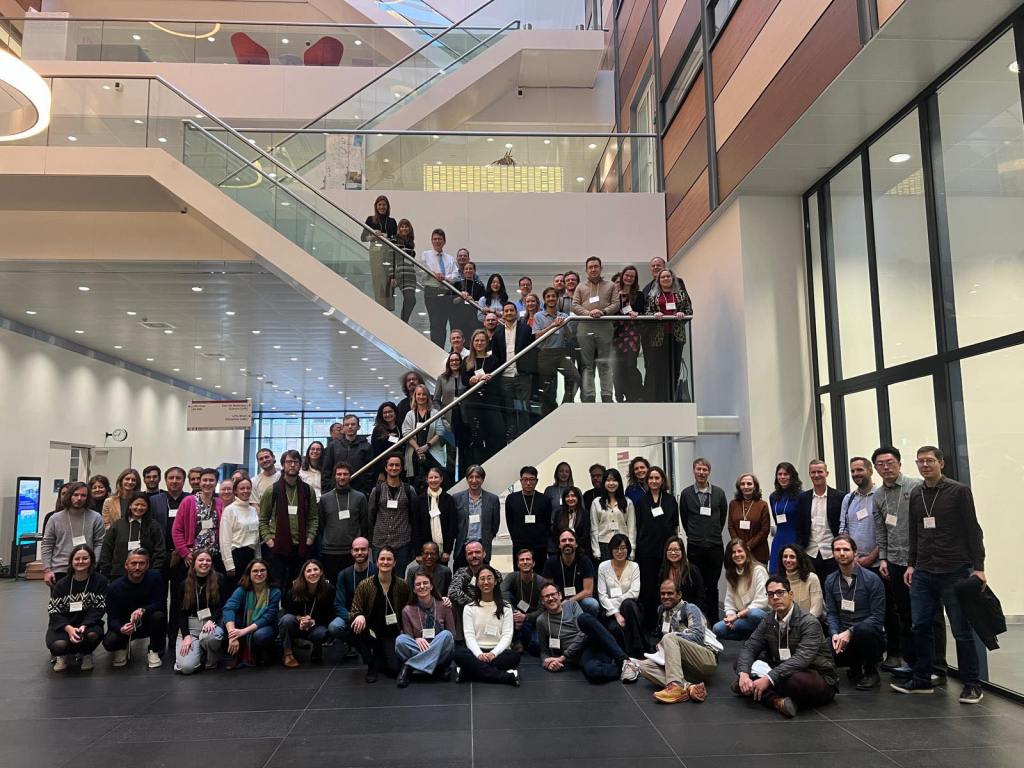
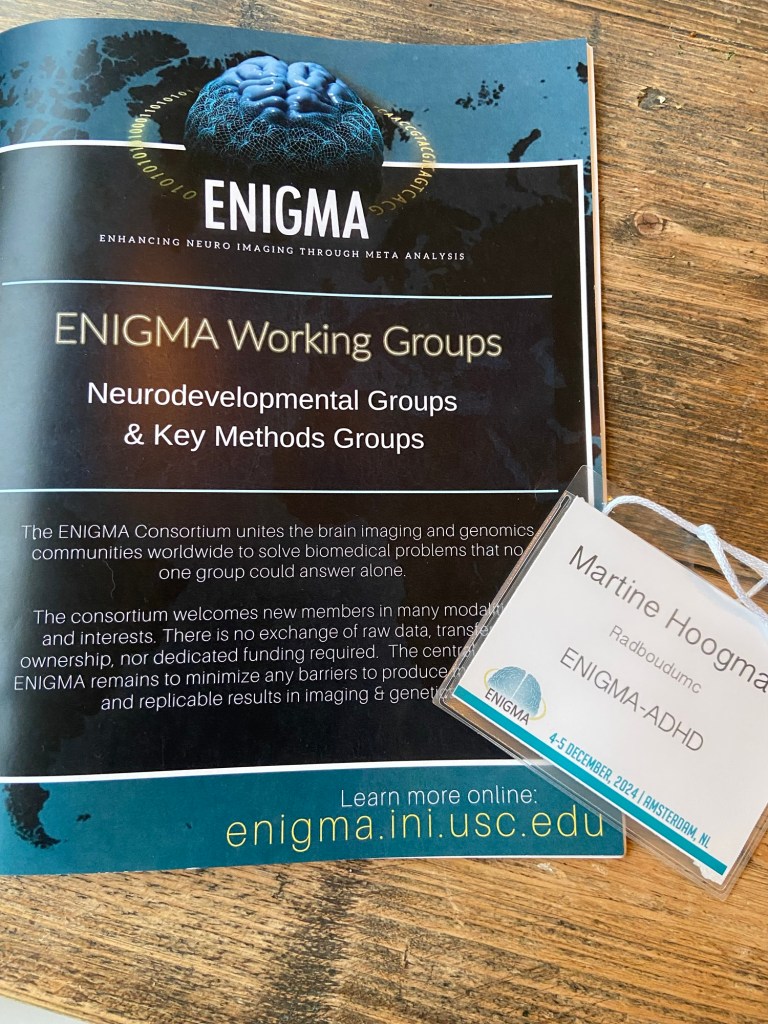
Dec 2025: It was a great ENIGMA summit in Amsterdam, where neurodevelopmental working groups and methods working groups met to share the latest results and tried to find new ways to collaborate. I will share here some of Paul Thompson’s (PI ENIGMA) conclusions of the 2-day meeting:

Today’s ENIGMA Summit compared over 20 brain disorders in tens of thousands of people scanned with MRI, and suggests that:

1. brain disorders that hit very early, before birth (e.g. those due to genomic copy number variants such as genetic deletions) tend to affect cortical surface area, often excessively in primary sensorimotor cortex

2. neurodevelopmental brain disorders that hit after birth but before adolescence tend to reduce cortical surface area more than (i.e. with greater effect sizes than) they reduce cortical thickness but more in a transmodal association cortex pattern than a primary sensorimotor pattern; these can be split into an strong externalizing and a weak internalizing pattern depending on the disorder type [4]

3. brain disorders that hit after puberty tend to affect cortical thickness, more so than regional cortical surface area, with some exceptions, as do adult onset disorders

4. the last category of mainly-thickness-deficit disorders can have their abnormality decomposed into 3 components – (1) a general component common to all disorders (PC1 in Zhipeng Cao’s work [2]), (2) a disorder specific component, and (3) a medication effect

5. focusing on the first two of these, there is a transdiagnostic covariance [1] that spans the set of disorder effects on the cortex and consists of 2 primary axes of disturbance, G1 and G2

6. to some extent, the amount and anatomical distribution of structural brain deviation in a disorder depends on the location and profile of greatest normal age-related brain change that is normally occurring in healthy people when the disorder hits and can look like an exaggerated version of that change, i.e. ‘aging’ 

7.  some of this is set out more formally in the transdiagnostic ENIGMA papers by Meike Hettwer/Sofie Valk on transdiagnostic covariance [1] and brain gradients, and in the linear PCA paper by Zhipeng Cao Hugh Garavan and ENIGMA [2]. For the CNV part see work by Clara Moreau [3], and for the childhood part see work by Sophie Townend and 4 of the ENIGMA neurodevelopmental working groups [unpublished except an abstract]. 

This is not really obvious until you see all the work presented together (as it was today at the ENIGMA Summit).

References:

  1. Hettwer et al., Nature Communications, 2022
  2. Cao et al., Mol Psychiatry, 2022
  3. Moreau et a., Curr Opin Genet Dev 2022
  4. Townend et al, https://osf.io/g42u5/
Uncategorized

Saying goodbey to Luca

Nov 2024: It was only a short visit of 9 weeks, but it was a great experience having Luca Hargitai, PhD student from the University of Bath in our group. We are sad to say goodbey and will miss her so much but fortunately, we have set up a very exciting new project when she was in Nijmegen, so we will keep on working together.

Goodbey lunch @ Plek in Nijmegen

Uncategorized

Lab retreat: working on a lab-handbook and ‘klootschieten’

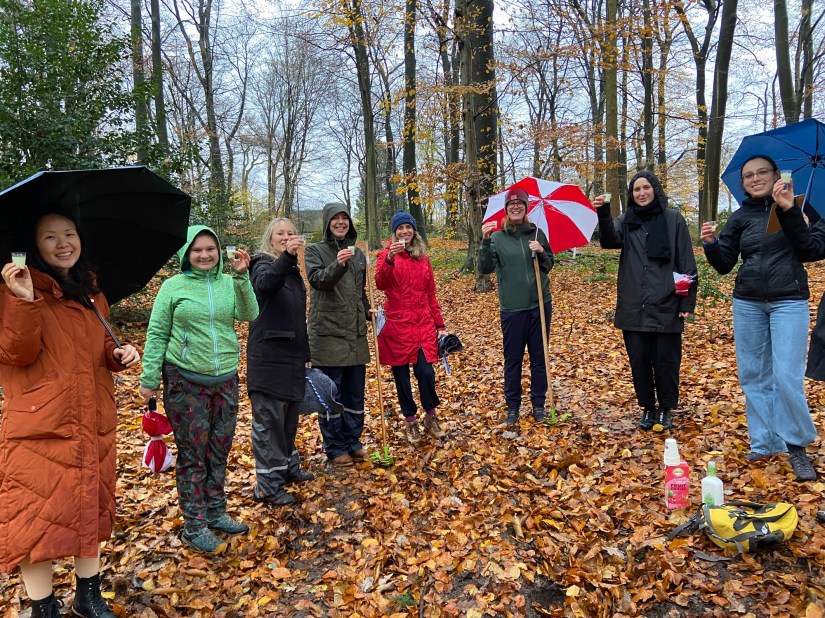
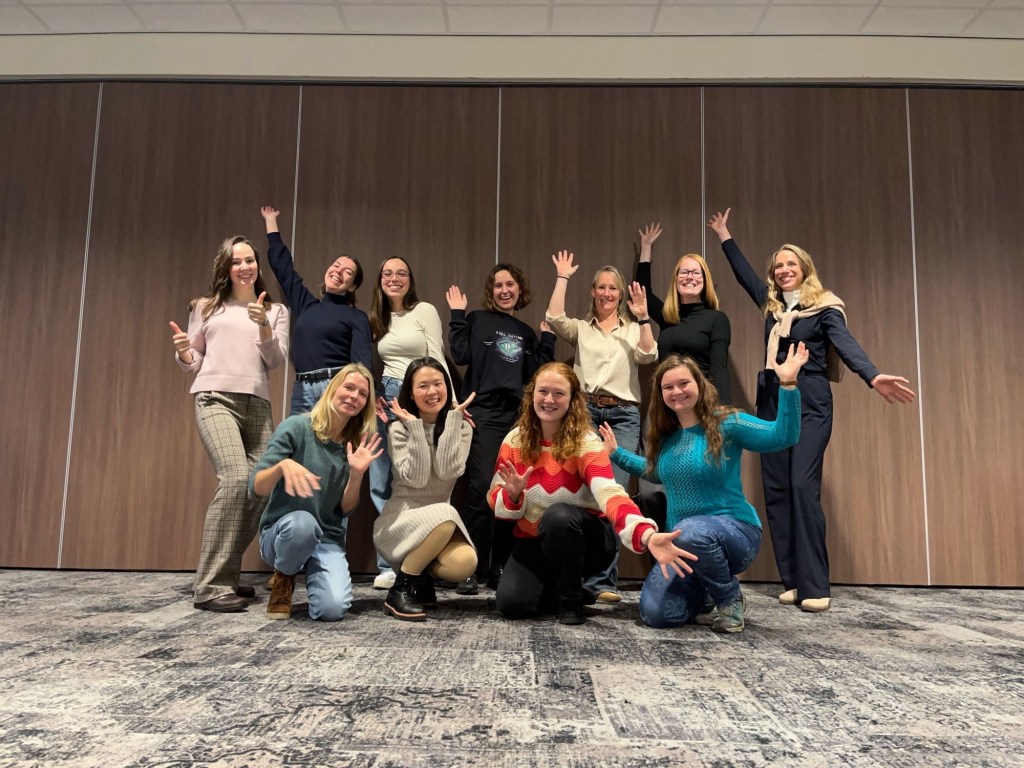
Nov 2024: The lab-groups of Corina Greven and Martine Hoogman joined forces to together work on a lab handbook for both labs. This was done during a 1,5 day lab retreat at the Holthurnsche Hof in Berg en Dal. It was a great success, and talking about our lab culture, development as a researcher, scientific vision and practicallities mainly for newcomers also brought us closer to one another. To get some fresh air, we put on our rain coats and went outside for a round of ‘klootschieten‘.

Uncategorized

Opening Brain Museum

November 2024: Exciting news, because at the end of this month, Nijmegen will have a brain museum! And what makes it even more exciting is that members of our group are preparing an exhibition about ADHD.

The brain is your body’s most complex organ. Would you like to discover how your brain helps you think and act? Then this is your chance because on Saturday 30 November (11 am – 5 pm), the doors of the new Brain Museum will officially open at the Latin School in Nijmegen. At the Brain Museum, you can go on an interactive journey of discovery through the world of the brain, behaviour and science! For both young and old, there is plenty to do. Are you curious? Take a look at the website of the Donders Institute here.

November 2024: Geweldig nieuws, want eind deze maand heeft Nijmegen een brein museum! En wat extra leuk is dat onderzoekers uit onze groep een tentoonstelling aan het voorbereiden zijn over ADHD.

Het brein is het meest complexe orgaan van je lichaam. Wil je ontdekken hoe jouw hersenen je helpen denken en doen? Dan is dit je kans. Op zaterdag 30 november (11:00 – 17:00 uur) gaan de deuren van het nieuwe Brein Museum officieel open in de Latijnse School in Nijmegen. In het Brein Museum kun je op een interactieve ontdekkingsreis gaan door de wereld van hersenen, gedrag, en wetenschap! Voor zowel jong als oud is er vanalles te doen. Ben je nieuwsgierig? Neem dan een kijkje op de website van het Donders Instituut.

ADHDplaza, Other

Our contribution to ADHD awareness month: a Geocache Adventure to Learn About ADHD!

October 2024: October is ADHD Awareness Month! To mark the occasion, we have launched a unique lab cache. This initiative is brought to you by researchers from our group who are dedicated to advancing the understanding of ADHD. Raising awareness and dissiminating information about ADHD is essential, as stigma surrounding the condition remains significant.

Stigma can have many negative impacts on those with ADHD, including low self-esteem and increased psychological challenges. By increasing public understanding of ADHD, we can work to reduce stigma.

So, why not join us? Let’s geocache together and learn more about ADHD!

Oktober 2024: Oktober is de ADHD Awareness Month! Om dit te markeren, hebben we een unieke labcache gelanceerd. Dit initiatief is opgezet door onderzoekers uit onze groep die zich inzetten voor het vergroten van kennis over ADHD. Bewustwording creëren en de juiste informatie over ADHD verspreiden is essentieel, omdat er nog steeds veel stigma rondom de aandoening bestaat.

Stigma kan veel negatieve gevolgen hebben voor mensen met ADHD, zoals een laag zelfbeeld en additionele psychische klachten. Het vergroten van kennis over ADHD, leidt tot het verlagen van stigma, dus laten we een handje helpen: Geocache je mee, en leer wat over ADHD!

Labmembers, NWO Vidi

New group members Luca, Inge and Amy present themselves

oct 2024: We have three excellent new group members, and they present themselves here:

Luca Hargitai

My name is Luca, and I am a visiting PhD student from the University of Bath in the UK. My research explores life outcomes in autism and ADHD and aims to improve our understanding of these neurodevelopmental conditions across the lifespan. I am particularly interested in how neurodevelopmental traits relate to mental health and I am passionate about utilising robust research to inform clinical practice in mental healthcare.

During my research placement, I will be investigating psychological strengths in ADHD. Through this project, we hope to better understand how being aware of these strengths and using them in everyday life relates to people’s wellbeing.


Amy de Roubaix

My name is Amy De Roubaix and I am a Belgian researcher with a background in pediatric physiotherapy. For the past seven years, I have investigated the early signs of the neurodevelopmental condition ‘Developmental Coordination Disorder’ (DCD) and its impact on children and their families. Since DCD very often co-occurs with ADHD, I am excited to broaden my research focus within the psychiatric research group at UMC Nijmegen.

I believe it is important to focus not only on perceived challenges but also on the positive aspects and opportunities of neurodivergence. I am excited to explore these strengths more deeply as a postdoctoral researcher. I will be working on the NWO Vidi project, ‘ADHD SPARCS,’ which examines the positive aspects of ADHD as reported by those around individuals with ADHD, how context influences ADHD-related strengths, and the neurobiological factors underlying these strengths.


Inge van Walraven

I am Inge Walraven, and I have been working at Radboudumc for 9 years. In recent years, I have been responsible for recruiting participants and communicating with participants for the Healthy Brain Study, a research project focused on the brains of people in their thirties. This project has now been completed.

On October 1st, I started as an Information & Communication Officer in Martine Hoogman’s group. In my new role, I will focus on establishing and maintaining a network for Radboudumc employees who are neurodiverse. The goal of this network is to share scientific knowledge about, for exmple, ADHD with employees and to gather input from employees with ADHD regarding research ideas and outcomes. I am very excited to get started with this wonderful project.

Labmembers, Positive aspects of ADHD

Emma Laan wins Bex thesis award

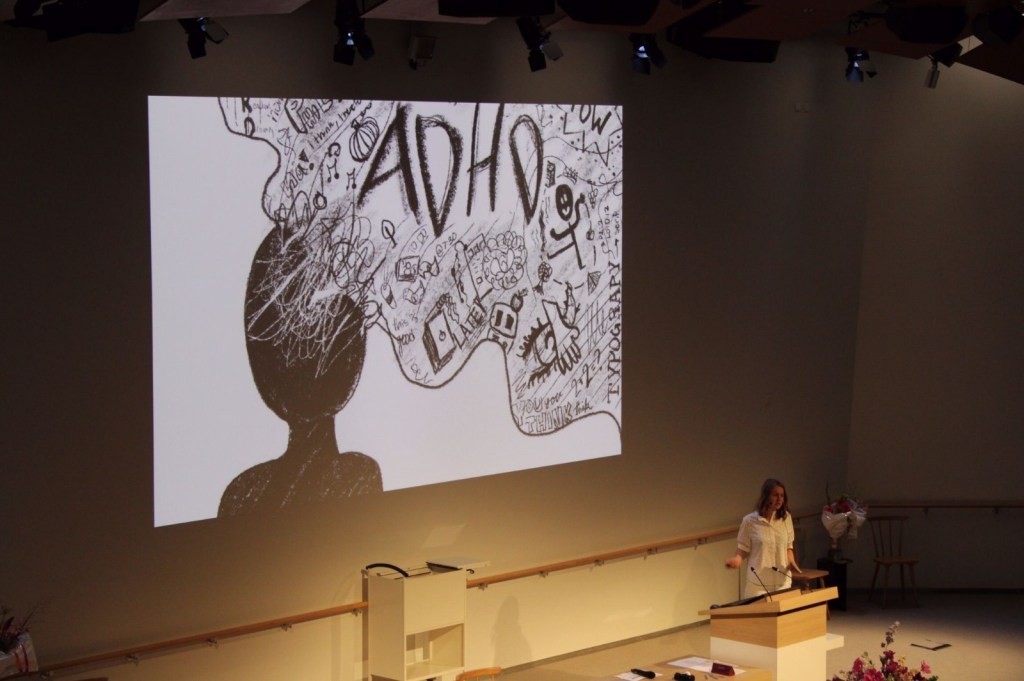
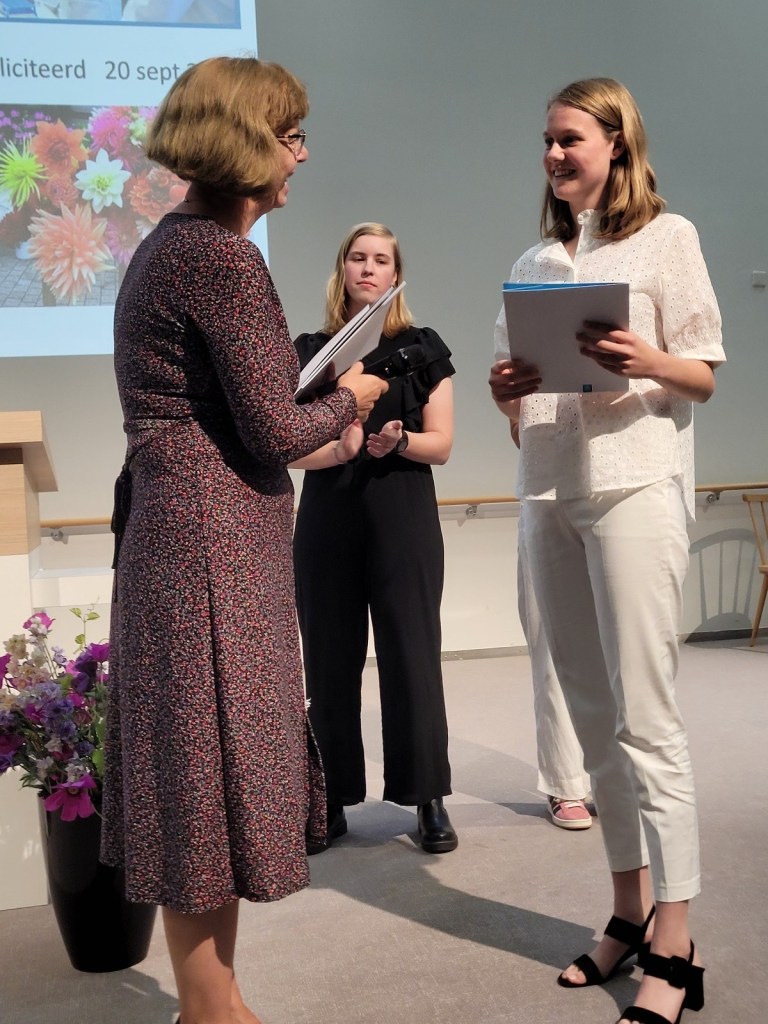
Sept 2024: We are so proud to report that Emma Laan, honours student in our lab, has won the Bex thesis award for the best bachelor thesis of biomedical sciences. On September 20, during the graduation ceremony, the prize was awarded to Emma. At the ceremonie she gave a presentation about her thesis and internship project. Emma was enrolled in the honours program, and for her honors internship Emma visited the University of Bath. Here she had a leading role in setting up a quantitative study on strengths, strengths knowledge and strength use in ADHD, all of this under the supervision of Luca Hargitai, Punit Shah and Martine Hoogman.

Congratulations Emma, so so well done!

Sept 2024: heel trost zijn wij dat Emma de Bex scriptieprijs voor beste bachelor scriptie bij biomedische wetenschappen, heeft gewonnen. Op 20 september, tijdens de diploma uitreiking gaf Emma een presentatie over haar scriptie en stageopdracht. Emma volgt het honours programma, waarvoor ze een stage deed in het buitenland. Zij bezocht de onderzoeksgroep van Punit Shah aan de universiteit van Bath. Emma heeft een onderzoek opgezet naar de sterkte kanten van ADHD, en ook gekeken naar ‘strength use’ en ‘strength knowledge’. Tijdens haar stage werd ze begeleid door PhD-student Luca Hargitai, Punit Shah, beide vanuit Bath en Martine Hoogman vanuit Nijmegen.

Fantastische prestatie Emma!