Labmembers, Positive aspects of ADHD

New publication alert: Sensory Processing Sensitivity and the Association with Attention-Deficit/ Hyperactivity Disorder (ADHD) Traits, and ADHD-Related Strengths in the General Population

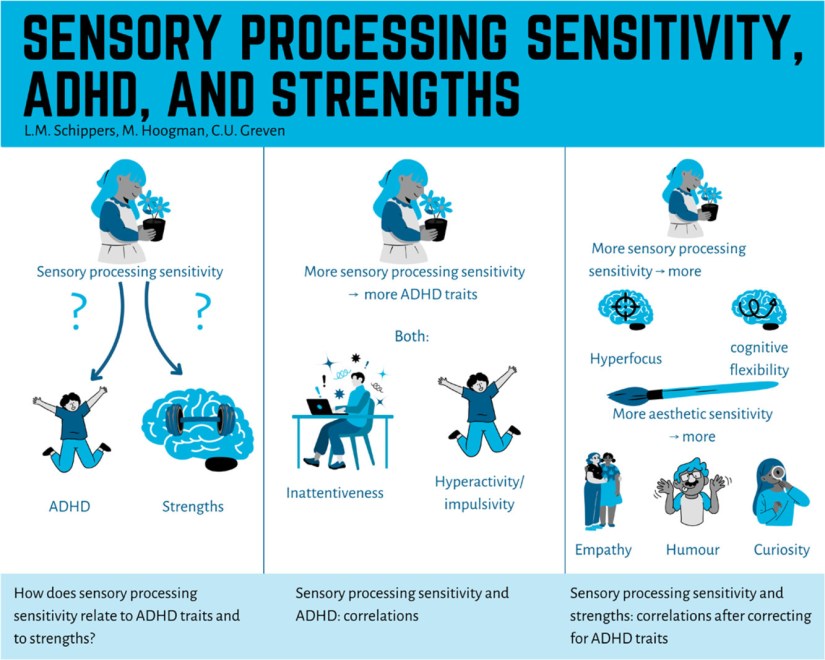
Nov 2025: When people think about ADHD, they might often think about the challenges like distractibility or impulsivity. In our research group, we try to broaden this picture by focussing on strengths. One finding that surprised us in our previous studies, was that people with ADHD describe sensitivity as one of their strengths related to ADHD. We were curious how sensitivity connects to ADHD, and if sensitivity itself connects to certain strengths. We found that people with more ADHD traits scored higher on a sensitivity questionnaire. Moreover, people who scored higher on sensitivity, also scored higher on questionnaires about hyperfocus and cognitive flexibility.

What is sensory processing sensitivity?

Let’s dive a little bit deeper into sensitivity. Sensory Processing Sensitivity (SPS) is a trait that makes some people more aware of internal and external environments, such as sounds, smells, and even emotions. About 20–30% of people are highly sensitive, and this comes with both strengths and challenges. Since people with ADHD identified SPS as a strength in our previous study, we wanted to dig deeper. Is there a link between ADHD and SPS? And what about SPS and strengths? About 500 people from the general population filled out a survey on ADHD traits, SPS, and strengths.

Here’s what we found:

Firstly, we found a clear association between ADHD and SPS. People who have more ADHD traits, score higher on all SPS subdomains. This finding held true when looking at inattentiveness and hyperactivity/impulsivity, and for men and women. When we compared a small group of people who said they have ADHD to those who did not, the ADHD group scored higher on sensitivity.

Second, we found that sensitivity is also linked to certain characteristics that people with ADHD identify as positive (‘strengths’). People who scored high on sensitivity, scored higher on two of these ‘strengths: hyperfocus and cognitive flexibility. Zooming in on the more positive side of sensitivity, aesthetic sensitivity, we found that this was linked to the additional strengths of empathy, humour, and curiosity.

How will these findings help us?

Now that we are finding out more about strengths related to ADHD, it is important to characterize these strengths and their relation to ADHD more deeply. With our study, we made a first step towards understanding how ADHD related to SPS, which might help people with ADHD and clinicians to better understand this relationship, and work towards more individualised pathways to thriving.

See here the reference to the paper, published in Current Research in Behavioral Sciences.

L.M. Schippers, M. Hoogman, C.U. Greven, Sensory Processing Sensitivity and the Association with Attention-Deficit/ Hyperactivity Disorder (ADHD) Traits, and ADHD-Related Strengths in the General Population, Current Research in Behavioral Sciences, 2025, 100193, ISSN 2666-5182, https://doi.org/10.1016/j.crbeha.2025.100193
Nov 2025: Nieuwe publicatie! Sensorische verwerkingsgevoeligheid en de associatie met ADHD-kenmerken en ADHD-gerelateerde sterke punten in de algemene bevolking

Wanneer mensen aan ADHD denken, denken ze vaak aan uitdagingen zoals afleidbaarheid of impulsiviteit. In onze onderzoeksgroep proberen we dit beeld te verbreden door ons te richten op sterke punten van ADHD. Een bevinding die ons in eerdere studies verraste, was dat mensen met ADHD hoogsensitiviteit beschrijven als een van de positieve aspecten van hun ADHD. We waren benieuwd hoe hoogsensitiviteit verband houdt met ADHD, en of hoogsensitiviteit zelf verband houdt met bepaalde positieve kanten van ADHD. We ontdekten dat mensen met meer ADHD-kenmerken hoger scoorden op een vragenlijst over hoogsensitiviteit. Bovendien scoorden mensen die hoger scoorden op hoogsensitiviteit, ook hoger op vragenlijsten over hyperfocus en cognitieve flexibiliteit.

Wat is hoogsensitiviteit?

Laten we wat dieper ingaan op hoogsensitiviteit. Hoogsensitiviteit of sensorische verwerkingsgevoeligheid (SPS) is een eigenschap die sommige mensen bewuster maakt van interne en externe omgevingen, zoals geluiden, geuren en zelfs emoties. Ongeveer 20-30% van de mensen is hoogsensitief, en dit brengt zowel sterke als zwakke punten met zich mee. Omdat mensen met ADHD in ons vorige onderzoek SPS als een sterk punt noemden, wilden we dieper graven. Is er een verband tussen ADHD en SPS? En hoe zit het met SPS en positieve kanten van ADHD? Ongeveer 500 mensen uit de algemene bevolking vulden een enquête in over ADHD-kenmerken, SPS en positieve aspecten van ADHD.

Dit is wat we ontdekten:

Ten eerste vonden we een duidelijk verband tussen ADHD en SPS. Mensen met meer ADHD-kenmerken scoren hoger op alle SPS-subdomeinen. Deze bevinding gold ook voor onoplettendheid en hyperactiviteit/impulsiviteit, en voor mannen en vrouwen. Toen we een kleine groep mensen die rapporteerden ADHD te hebben, vergeleken met degenen die dat niet hadden, scoorde de ADHD-groep hoger op hoogsensitiviteit.

Ten tweede ontdekten we dat SPS ook verband houdt met bepaalde eigenschappen die mensen met ADHD als positief (‘sterke punten’) beschouwen. Mensen die hoog scoorden op SPS, scoorden hoger op twee van deze ‘sterke punten’: hyperfocus en cognitieve flexibiliteit. Door in te zoomen op een subdomein van SPS, esthetische gevoeligheid (een positieve kant van SPS), ontdekten we dat dit verband hield met nog meer positieve aspecten van ADHD: empathie, humor en nieuwsgierigheid

Hoe zullen deze bevindingen ons helpen?

Nu we meer te weten komen over de positieve aspecten van ADHD, is het belangrijk om deze aspecten en hun relatie met ADHD dieper te karakteriseren. Met onze studie hebben we een eerste stap gezet in het begrijpen hoe ADHD verband houdt met SPS. Dit kan mensen met ADHD en clinici helpen om deze relatie beter te begrijpen en te werken aan meer geïndividualiseerde trajecten naar een succesvolle ontwikkeling.

Klik hier om naar de publicatie te gaan:

L.M. Schippers, M. Hoogman, C.U. Greven, Sensory Processing Sensitivity and the Association with Attention-Deficit/ Hyperactivity Disorder (ADHD) Traits, and ADHD-Related Strengths in the General Population, Current Research in Behavioral Sciences, 2025, 100193, ISSN 2666-5182, https://doi.org/10.1016/j.crbeha.2025.100193
Labmembers, Positive aspects of ADHD

ADHDawarenessMonth Post 4: visiting a.s.r. to share our work with company doctors

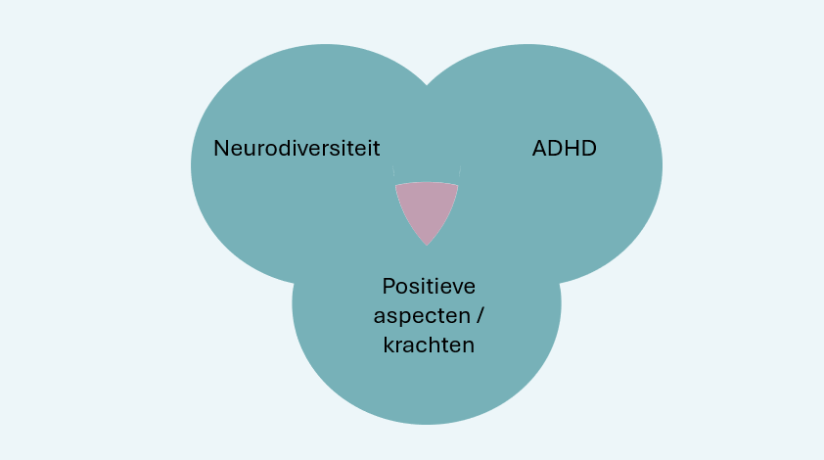
We werden vorige week uitgenodigd om een lezing te geven voor medewerkers van verzekeraar a.s.r. en dit over een onderwerp die ons nauw aan het hart ligt: neurodiversiteit, ADHD, en de positieve kanten van anders denken.

Tijdens de lezing bespraken en ervaarden we hoe ieder brein op een unieke manier werkt. Dat is niet alleen helemaal oké, het is ook nog eens waardevol. In sommige situaties is een bepaalde manier van denken juist een voordeel, terwijl in andere contexten een andere aanpak beter werkt. ADHD wordt vaak gedefinieerd aan de hand van wat er misgaat. Maar wat als we ook kijken naar wat er wél goed gaat? Neem nu impulsiviteit. Dat wordt vaak gezien als een risico. Maar het kan er ook voor zorgen dat je snel en doeltreffend reageert in crisissituaties, of dat jij degene bent die wél die wereldreis maakt waar anderen alleen maar over praten.

Een mooie vraag van één van de deelnemers was: hoe brengen we deze boodschap naar beleid, zorg en onderwijs? Tja, meer en sterker onderzoek kunnen ons daar zeker mee op weg helpen en ook het vinden van de juiste partners is daarbij heel belangrijk (neem zeker contact op als jij lijntjes hebt met beleid!). Maar we hoeven daar ook niet op te wachten. We kunnen nu al kleine zaadjes planten door in gesprek te gaan met elkaar over neurodiversiteit, door te kijken naar de unieke talenten binnen het team, en door bespreekbaar te maken wat voor ons wel of niet werkt.

Diversiteit is geen probleem dat opgelost moeten worden. Laat het een kracht zijn die ons verder brengt. Want als we allemaal op dezelfde manier zouden denken en doen, zou de wereld maar een saaie plek zijn.

ADHD and creativity, Labmembers, Positive aspects of ADHD

ADHDawarenessMonth Post 3: our group’s contributions to the ECNP conference in Amsterdam

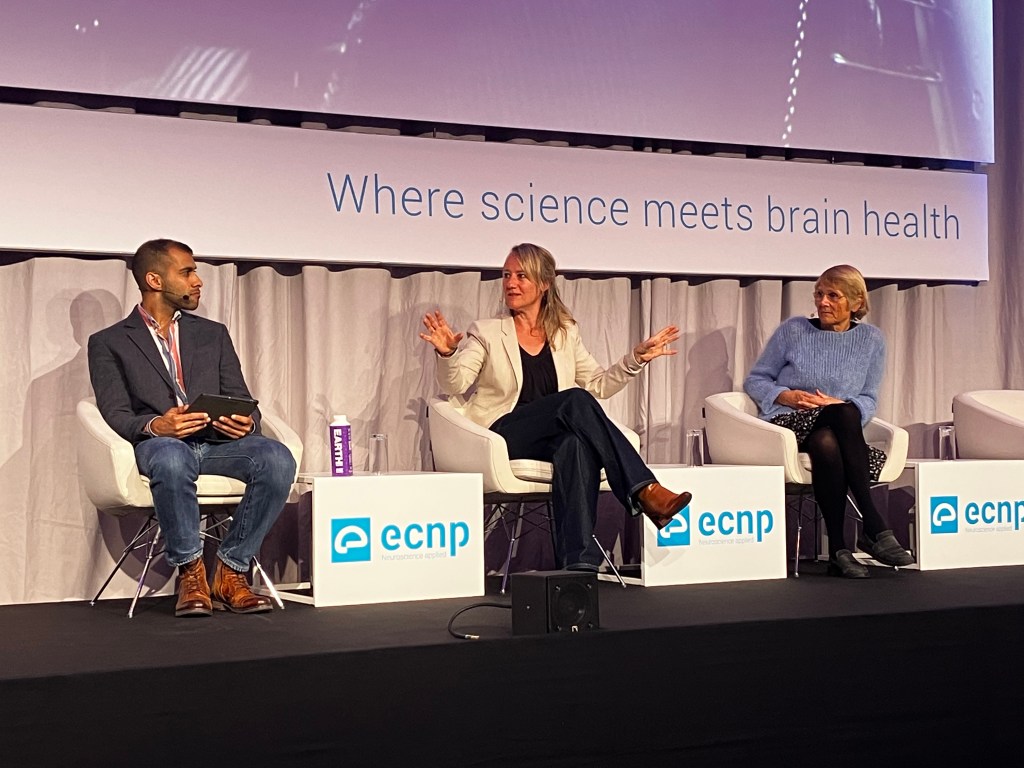
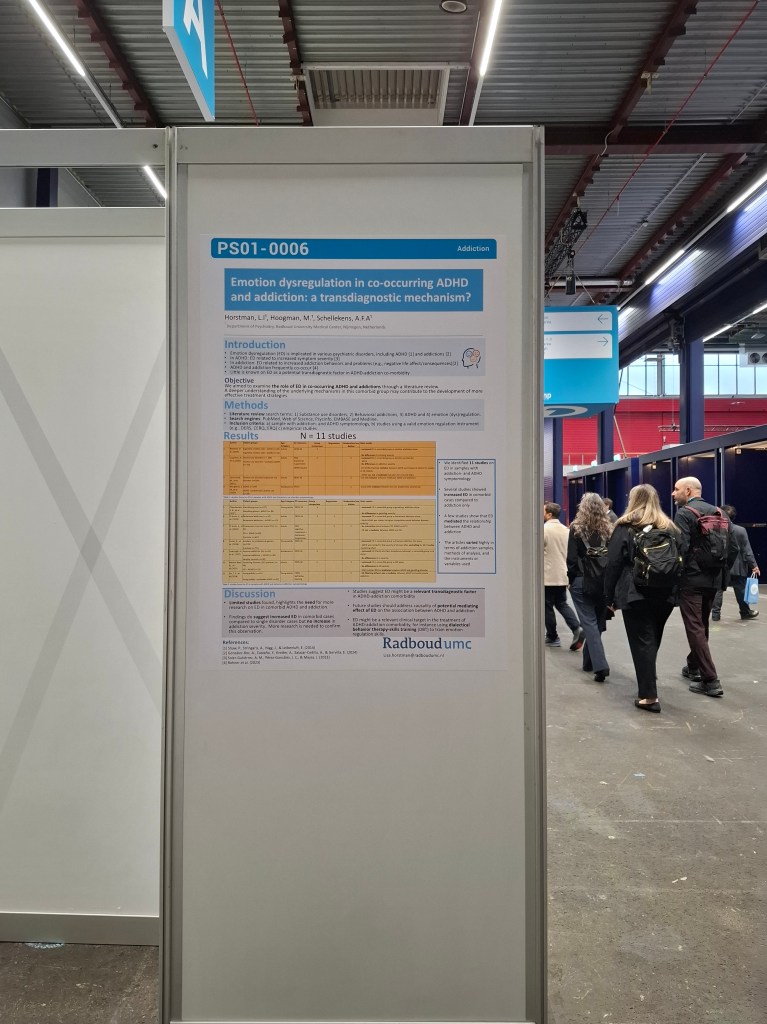
Oct 2025: This years European College of NeuroPsychopharmacology (ECNP) conference was held in Amsterdam. Our group was involved with 3 posters, 1 workshop and one symposium

Poster: Emotion dysregulation as a core transdiagnostic symptom in co-occurring substance use disorder and ADHD: a review: Lisa Horstman

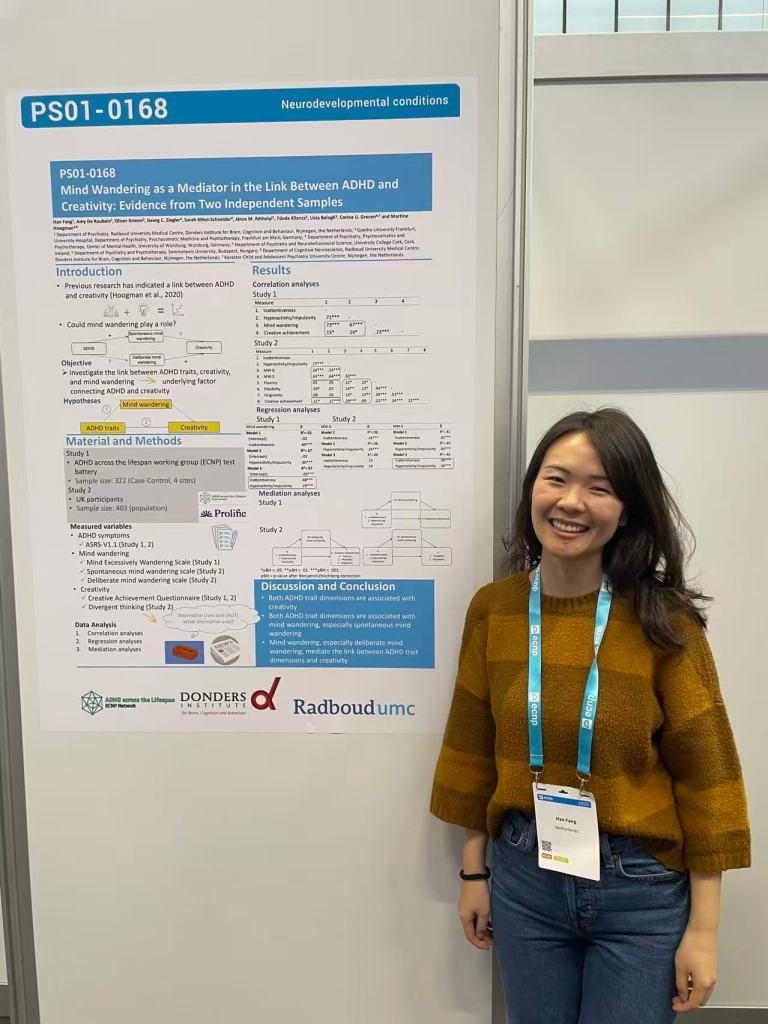
Poster: Mind wandering as a mediator in the link between ADHD and creativity: evidence from two independent samples, Han Fang. ECNP also published a press release about Han’s work, which was picked up by a number of scientific and medical websites.

Poster: Neurodivergent strengths and wellbeing: new insights from attention-deficit/hyperactivity disorder, Luca Hargitai

Workshop: How to excel your career in open science, Jeanette Mostert

Symposium: Positive aspects and strengths in the context of neurodevelopmental conditions, Martine Hoogman

We all got great feedback and had a good time!

Labmembers, Positive aspects of ADHD

ADHDawarenessMonth Post 2: Radboudumc Neurodiversity Employee Network ‘SUNNI’ kicks off with Lunch Sessions

Oct 2025: Our SUNNI (‘Samen Uniek: Netwerk voor Neurodiversiteit in het Radboudumc’) has kicked off with lunch sessions to share the latest insights from science related to neurodiversity with employees of the Radboudumc. We held our first session on the 9th of October, and PI of this research group, Martine Hoogman, kicked-off with the topic of ‘Strengths in ADHD’. It was a great turn out and there were a lot of valuable interactions among the people in the audience. Looking forward to the next sessions where Emma Sprooten will share information about the neurobiology of neurodiversity (19th of January) and Corina Greven will tell us more about HSP (February 2026). For employees in the Radboudumc, please check out intranet page for more events.

We held our meeting in the Nicolaas Tulp room in the Radboudumc. In the context of strengths in ADHD we looked at this picture and wondered whether there was someone here with ADHD. People with ADHD self-report to be adventurous, novelty seeking and eager to take risks… would the first person who ever cut open someone’s arm, not have to have these characteristics?  
NWO Vidi, Positive aspects of ADHD

ADHDAwarenessMonth Post 1: new paper alert!

Oct 2025: It is again ADHD awareness month! All the more reasons to share our new paper published in Psychological Medicine: Hargitai, L. D., Laan, E. L. M., Schippers, L. M., Livingston, L. A., Fairchild, G., Shah, P., & Hoogman, M. (2025). The role of psychological strengths in positive life outcomes in adults with ADHD. Psychological Medicine55, e278. doi:10.1017/S0033291725101232

📊 Our study, a collaborative effort between the University of Bath, Radboudumc and King‘s College London, compared 200 adults with ADHD and 200 adults without ADHD on how much they endorsed 25 positive traits (derived from our previous study)

💪 We identified 10 potential ADHD-related strengths – that is, traits that were endorsed more strongly by adults with ADHD than their neurotypical peers. This included things like hyperfocus, humour, creativity, spontaneity and intuitiveness.

😊 Crucially, across both groups, adults who were more aware of their own strengths and those who used their strengths more frequently in their day-to-day lives had better wellbeing, improved quality of life and fewer symptoms of depression, anxiety and stress.

‼️ Our findings provide important support for the development of strengths-based interventions for adults with ADHD, something that the neurodivergent community has been actively calling for.

All credits go to Luca Hargitai, former visiting PhD student in our group and student Emma Laan. Also special thanks to Dr Punit Shah, Prof Graeme Fairchild from the Department of psychology University of Bath, Lessa Schippers from Radboudumc and Dr Lucy Anne Livingston, PhD from King’s College London.

Please also read this interview about our study !

Labmembers, Positive aspects of ADHD

Lessa Schippers receives two grants to visit the University of Calgary

Aug 2025: Lessa Schippers, a Ph.D. candidate in our group has obtained two grants, The Ter Meulen grant and a grant from the Culture Fund, to spend four months abroad. She will join Dr. Emma Climie’s research group at the University of Calgary in Canada. Her project will focus on the positive aspects of ADHD in children and adolescents, which will be a valuable addition to her current research on the positive aspects of ADHD in adults.

During her stay, she will contribute to an intervention study focused on social skills training for young people with ADHD and be involved in analyzing research data. She will also attend the CADDRA (Canadian ADHD Resource Alliance) conference to gain insight into ADHD research and clinical practice in Canada.

Dr. Climie specializes in child psychology and has committed herself to strengthening the resilience and well-being of children with ADHD for many years. She leads the research group “Strengths in ADHD,” which takes a strengths-based approach to working with children and families with ADHD. This collaboration will allow Lessa to deepen her expertise and integrate international insights into her research.

Lessa received two grants to support her research stay: a internationalization grant from the Cultural Fund (Banning de Jong Fund) and a KNAW Ter Meulen grant. Both grants support young researchers in achieving their international goals and promote the exchange of knowledge across national borders. Specifically, the KNAW Ter Meulen grant supports young pediatric researchers who wish to conduct research abroad. The Cultural Fund supports talented students and young researchers in realizing their dream careers through international experience. The Banning de Jong Fund, a named fund within the Cultural Fund, focuses on projects related to the relationship between culture and medicine and on granting scholarships for medical research.

Celebrations @ Cultural Fund

Aug 2025: Vanaf september 2025 zal Lessa Schippers, PhD-kandidaat in de onderzoeksgroep van dr. Martine Hoogman, vier maanden onderzoek doen in de onderzoeksgroep van dr. Emma Climie aan de University of Calgary in Canada. Haar project richt zich op de positieve kanten van ADHD bij kinderen en jongeren, een waardevolle aanvulling op haar huidige onderzoek naar positieve aspecten van ADHD bij volwassenen.

Tijdens haar verblijf zal Lessa onder andere bijdragen aan een interventiestudie gericht op sociale vaardighedentraining voor jongeren met ADHD, en betrokken zijn bij de analyse van onderzoeksdata. Daarnaast zal ze een bezoek brengen aan het CADDRA (Canadian ADHD Resource Alliance) congres, om een breder beeld te krijgen van het ADHD-onderzoek en de klinische praktijk in Canada.

Dr. Climie is gespecialiseerd in kinderpsychologie en zet zich al jaren in voor het versterken van veerkracht en welzijn bij kinderen met ADHD. Zij leidt de onderzoeksgroep “Strengths in ADHD”, die zich richt op kinderen en gezinnen met ADHD vanuit een sterke-kantenbenadering. De samenwerking biedt Lessa de kans om haar expertise te verdiepen en internationale inzichten te integreren in haar onderzoek.

Voor dit onderzoeksverblijf ontving Lessa twee beurzen: een buitenlandbeurs van het Cultuurfonds (Banning de Jong Fonds) en de KNAW Ter Meulen beurs. Beide beurzen zijn bedoeld om jonge onderzoekers te ondersteunen in hun internationale ambities en dragen bij aan kennisuitwisseling over landsgrenzen heen. De KNAW Ter Meulen beurs richt zich specifiek op jonge onderzoekers binnen de kindergeneeskunde die een werkbezoek willen brengen aan het buitenland. Het Cultuurfonds ondersteunt getalenteerde studenten en onderzoekers bij het realiseren van hun droomcarrière door middel van internationale ervaring. Het Banning de Jong Fonds is een fonds op naam binnen het Cultuurfonds dat zich richt op projecten rond de relatie tussen cultuur en geneeskunde, en het verlenen van beurzen voor wetenschappelijk onderzoek binnen de geneeskunde.

ADHDplaza, Labmembers, Positive aspects of ADHD

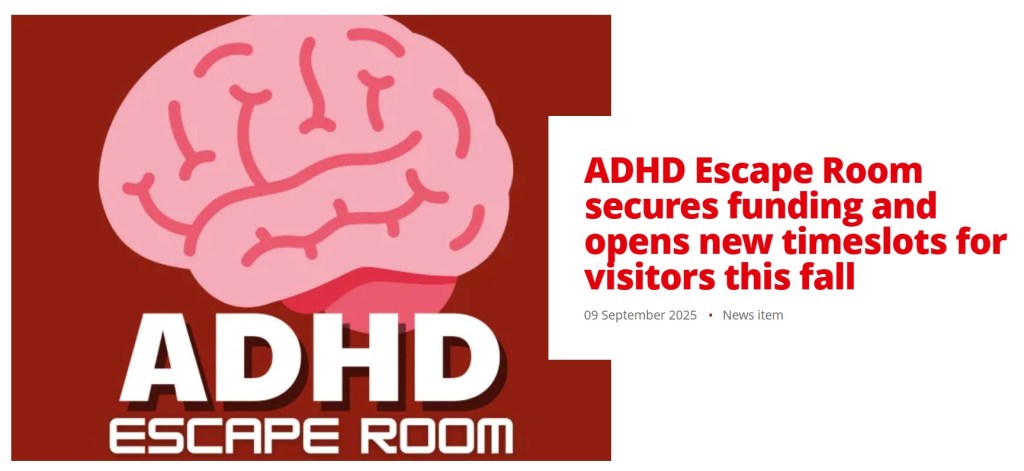
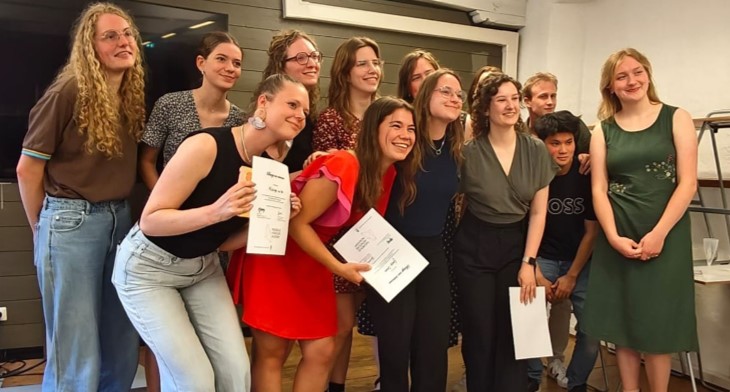
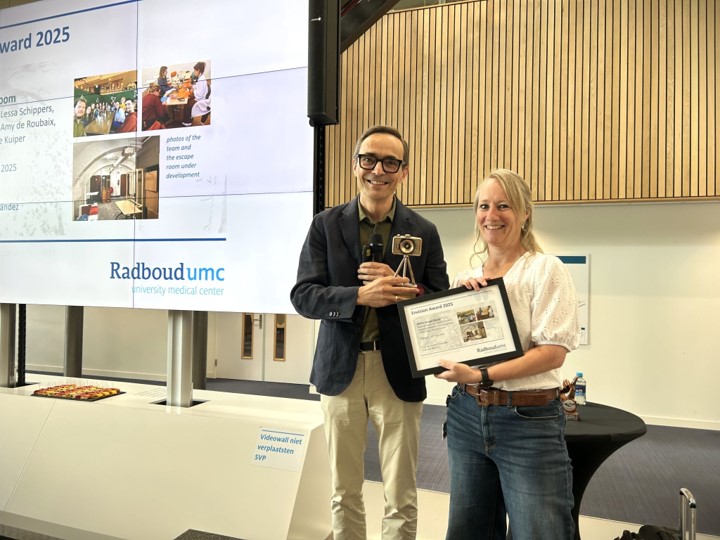
Our ADHD escape room wins Envison Award at the Radboud Strategy day

Juni 2025: At this year’s Radboudumc Research Strategy Day, our ADHD escape room project won the Envision Award 🏆 . This award acknowledges efforts of scientists that ‘captivate audiences with original outreach’, ‘connect science to real-world experiences‘ and ‘inspire curiosity and care beyond academia‘. Please also see the other great nominees !

It was already very rewarding to work with so many enthousiastic students, but this is a very nice bonus!

Great team effort by all the people below!!

Labmembers, Positive aspects of ADHD

Group members at the Dutch Psychiatry Spring Conference 2025

April 2025: Lessa and Martine attended the Dutch Psychiatry Spring Conference in Maastricht to present their work. Lessa had a poster (in Dutch: ‘Positieve karaktereigenschappen van ADHD: Een zelf- en peer-report case-control studie’) but also had the opportunity to do a pecha kucha. Martine was part of the session for invited professors (Innovatieve Benaderingen in de Psychiatrie:
Van Onderzoek naar Toepassing) and presented an overview of her labs work on positive aspects of ADHD. It was a great experience to share our work en get feedback from Dutch clinicians.